
China’s traditional arts and crafts are not one fixed style; they reflect regional materials, skilled hands, and changing tastes. A blue-and-white porcelain bowl, for example, may carry fine brushwork beneath a smooth glaze, while Suzhou embroidery can turn silk thread into delicate landscapes. Some details surprise. This guide introduces ten widely recognized traditions, including paper cutting, cloisonné, jade carving, lacquerware, calligraphy, bamboo weaving, and kite making. Each craft has its own tools, techniques, and local history. These examples offer a starting point, not a complete map of China’s vast creative heritage.
Readers searching for “Arts And Crafts In Chinese” may be looking for cultural context as well as recognizable objects. We will explore how artisans shape materials, what motifs can mean, and why certain pieces remain valued today. A carved surface or a bright red paper window decoration often reveals more than its appearance suggests. Still, labels such as “traditional” can hide differences between regions and generations. Some workshops preserve older methods; others adapt designs for contemporary homes and visitors. That tension matters. No short list can represent every community, and not every beautiful object has a simple story. The aim is to describe these crafts carefully, with attention to their makers, materials, and distinctive details.
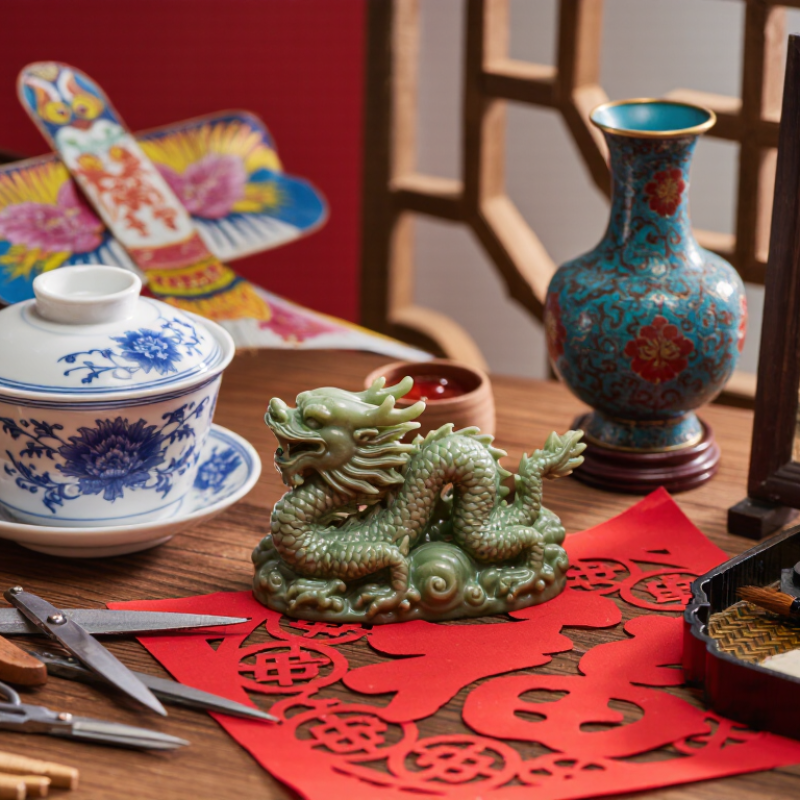
Traditional Chinese arts and crafts are not one fixed style, but a wide range of skilled practices shaped by place, materials, and daily life.
They include porcelain making, silk embroidery, lacquer work, paper cutting, and carved jade. Each craft has its own tools and visual language. A ceramic bowl may show the potter’s steady hand in its rim, while embroidery reveals careful changes in thread and stitch. These objects can be beautiful, but beauty is only part of their meaning. Many also served practical, ceremonial, or family purposes.
Tradition is carried through repeated practice, teaching, and adaptation. A craftsperson may learn to judge clay by touch or notice when lacquer has dried enough for another layer. Regional materials and customs influence both technique and design, so two objects in the same category may look quite different.
Not merely decoration. The boundary between art and craft is not always neat, and that distinction can hide the knowledge behind useful objects.
Still, preserving a tradition does not mean freezing it in the past. New makers may change patterns or tools, sometimes with mixed results. That tension is worth noticing.
China’s craft traditions grow from local materials, climates, and ways of life. Jingdezhen porcelain, made in Jiangxi, reflects generations of skill working with fine clay and high-fired kilns. Nearby, Yixing potters shape porous clay into teapots suited to repeated use. Place matters.
Suzhou embroidery uses fine silk threads to create delicate scenes, while Hangzhou’s silk weaving draws on a long history of sericulture. Beijing’s cloisonné combines metalwork and colored enamel. In Shaanxi, paper-cutters fold and snip red paper into bold shapes for festivals and home decoration. Materials speak.
Other traditions reveal different regional settings. Miao silverwork and embroidery in Guizhou often carry motifs tied to community identity and family history. Tibetan thangka painting follows Buddhist traditions, with careful rules for composition and color. Bamboo weaving in Sichuan turns a readily available plant into baskets and household objects; Fuzhou lacquerware is known for layered finishes and intricate forms. These regional labels are useful, but they can flatten differences between villages and individual makers. Traditions change, too, and a familiar design may look different in a contemporary workshop. That deserves a closer look.
| # | Art or Craft | Region of Origin or Renown | Traditional Materials | Distinctive Features | Regional Influence |
|---|---|---|---|---|---|
| 1 | Jingdezhen Porcelain | Jingdezhen, Jiangxi Province | Porcelain clay, glaze, and mineral-based pigments | Fine, high-fired porcelain, often decorated with underglaze blue designs or colorful painted patterns. | Local ceramic resources and generations of kiln expertise helped make Jingdezhen a major center of Chinese porcelain production. |
| 2 | Suzhou Embroidery | Suzhou, Jiangsu Province | Silk thread and silk fabric | Delicate, closely worked stitches and subtle shading create detailed images, including flowers, animals, and landscapes. | The Jiangnan region’s long-standing silk culture supported the development of exceptionally refined embroidery. |
| 3 | Hunan Embroidery | Hunan Province, especially Changsha | Silk thread and woven fabric | Known for bold color, textured stitching, and lifelike depictions of subjects such as tigers and landscapes. | Local artistic tastes and the region’s embroidery traditions shaped its expressive imagery and strong use of color. |
| 4 | Shu Embroidery | Sichuan Province, especially Chengdu | Silk thread and silk fabric | Fine, even stitches and rich colors are used for intricate scenes, flowers, birds, and other subjects. | Its development reflects Sichuan’s established silk production and distinctive regional decorative traditions. |
| 5 | Cantonese Embroidery | Guangdong Province, especially Guangzhou and nearby areas | Silk and, in some traditional work, metallic threads | Often features vivid colors, elaborate compositions, and raised or dimensional stitching. | Southern Chinese tastes and the region’s history as a center of trade influenced its materials, motifs, and decorative style. |
| 6 | Beijing Cloisonné | Beijing | Copper body, metal wires, and colored enamel | Thin wires form compartments on a metal surface; the compartments are filled with enamel and fired, then polished. | Its elaborate technique flourished in the capital, where court-related arts and skilled workshops encouraged finely finished decorative objects. |
| 7 | Yixing Zisha Pottery | Yixing, Jiangsu Province | Local purple clay, known as zisha | Unglazed teapots and vessels are shaped from distinctive clay, with forms that emphasize the material’s natural texture. | Local clay deposits and the region’s tea culture helped establish Yixing as a center for teaware making. |
| 8 | Fuzhou Bodiless Lacquerware | Fuzhou, Fujian Province | Lacquer, fabric, and a temporary mold | Layers of lacquer-soaked fabric form a lightweight object; after the mold is removed, the surface can be decorated and polished. | Fuzhou’s specialized lacquer tradition developed into a distinctive craft known for lightness and detailed surface decoration. |
| 9 | Guizhou Batik | Guizhou Province | Cotton cloth, beeswax, and dye | Wax-resist designs are drawn or applied to cloth before dyeing, producing characteristic patterns and fine crackle lines. | Distinctive batik traditions are practiced by communities in Guizhou, with regional motifs and techniques varying among groups. |
| 10 | Longquan Celadon | Longquan, Zhejiang Province | Porcelain stone or ceramic clay and celadon glaze | Recognized for a smooth green glaze, ranging from pale tones to deeper green hues, on carefully fired ceramic forms. | Local materials, kiln practices, and centuries of regional ceramic production shaped Longquan’s celebrated celadon tradition. |
China’s arts and crafts reflect regional materials, skilled hands, and generations of practice. They are best understood through their surfaces and methods, rather than as one uniform national style. Silk embroidery layers colored threads into flowers, birds, and flowing landscapes; the reverse can look far less tidy than the front. Porcelain takes shape through careful forming and firing, with glazes that may shift subtly in the kiln. Cloisonné enamel fills fine metal compartments with color, creating a smooth, polished surface. Paper cutting turns folded sheets into delicate silhouettes, often revealing intricate patterns when held against a window.
Jade carving depends on reading the stone’s color and natural form before removing material. Lacquerware gains depth through repeated coats, patient polishing, and sometimes fine inlaid decoration. Chinese knotting uses continuous cord to make symmetrical ornaments, with each loop needing consistent tension. Shadow puppetry combines shaped, colored figures with light, movement, and music. Woodblock printing transfers carved designs onto paper, sometimes leaving visible variations between impressions. Bamboo weaving transforms narrow strips into baskets and household objects. Small details matter.
When examining these crafts, notice tool marks, joins, and changes in texture; they can reveal how an object was made. Not every edge is perfect. A slightly uneven cut or weave may show the hand behind the work, though it can also reflect limited time or skill. It takes patience. These objects make more sense when viewed up close, not only through a brief description.
Materials, Techniques, and Cultural Meanings
A useful top-ten tour includes Jingdezhen porcelain, Suzhou embroidery, paper-cutting, lacquerware, cloisonné, bamboo weaving, brocade, woodblock printing, jade carving, and kite-making. Their materials shape their methods: porcelain clay is fired into hard, glazed forms; silk threads build detailed patterns; bamboo strips are split and woven by hand. Lacquer gains depth through repeated coats, while cloisonné uses fine metal wires to separate colored enamel. Small details matter. A paper cut’s symmetry, for example, can carry wishes for luck or celebration.
These objects also hold meanings that vary across regions and families. Brocade patterns may express status or good fortune, while jade is often associated with virtue and protection. UNESCO’s Intangible Cultural Heritage records listed 44 Chinese elements by 2024, including several traditional craft practices. That count documents recognized living heritage, not the number of active workshops or the size of the craft market. Craft traditions are sometimes presented as unchanging; in practice, makers adapt materials, designs, and uses. That tension deserves attention.
Tips: Look closely at the reverse side, joins, and tool marks. Ask what the materials are and how the object is made. Treat a symbolic meaning as a clue, not a universal rule.
Chinese craftsmanship is preserved through hands-on teaching, community practice, and the careful repair of old techniques. A Jingdezhen potter may adjust a vessel’s rim by touch, while Suzhou embroiderers build color with fine silk stitches. UNESCO reports that China has 44 elements inscribed on its intangible cultural heritage lists, more than any other country. That recognition matters, but daily practice matters too.
Reinvention helps crafts speak to new audiences. Artisans adapt traditional patterns for contemporary clothing, homeware, and public installations, while keeping characteristic materials and methods visible. China’s National Bureau of Statistics reported 12.95 trillion yuan in operating revenue for cultural and related industries above designated size in 2023. This broad sector figure is not a craft-market estimate, but it shows the wider economic setting in which cultural work operates. Small details matter.
Preservation is not simply freezing a craft in time. Younger makers need room to experiment, yet fast production can flatten the differences that make regional work distinctive. That balance is not always neat. A new design may attract attention, but communities should have a meaningful role in deciding how their traditions are represented and taught.
They are skilled practices shaped by local materials, daily life, and generations of teaching. Examples include porcelain making, embroidery, paper cutting, and bamboo weaving.
Common examples include porcelain, silk embroidery, lacquerware, cloisonné, jade carving, brocade, woodblock printing, bamboo weaving, paper cutting, and kite-making.
Look at tool marks, joins, texture, and the reverse side. Some edges wobble. A mark can offer a clue, but it may not tell the whole story.
Porcelain clay is shaped and fired, while silk threads build patterns stitch by stitch. Bamboo strips are split and woven by hand.
Regional materials, customs, and a maker’s choices shape each piece. Even similar patterns may differ in color, texture, or finish.
Paper-cut designs may express wishes for luck or celebration. Jade is often linked with virtue or protection, but meanings vary between families and regions.
No. Makers may adapt tools, patterns, materials, or uses. Some changes work better than others, which is worth considering.
Look closely at its surface and reverse, then ask how its materials were used. Treat symbolic meanings as clues, not universal rules.
China’s traditional arts and crafts reflect centuries of skill, regional identity, and cultural expression. Among the country’s representative traditions are ceramics, silk embroidery, paper-cutting, lacquerware, jade carving, cloisonné, woodblock printing, bamboo weaving, shadow puppetry, and calligraphy. Each craft draws on locally available materials and distinctive techniques, from shaping and firing clay to carving, stitching, dyeing, and layering color. Together, they show how artisans have transformed everyday resources into objects and images that carry meaning.
Regional landscapes and customs have shaped these practices, influencing their materials, patterns, and uses. Motifs may express wishes for good fortune, harmony, or a connection to nature, while the finished works serve practical, ceremonial, or decorative purposes. Arts And Crafts In Chinese culture continue to evolve as makers teach traditional skills, adapt designs for contemporary life, and explore new ways to share their work. In this way, preservation is not simply about keeping old methods unchanged; it also allows craftsmanship to remain meaningful for future generations.
