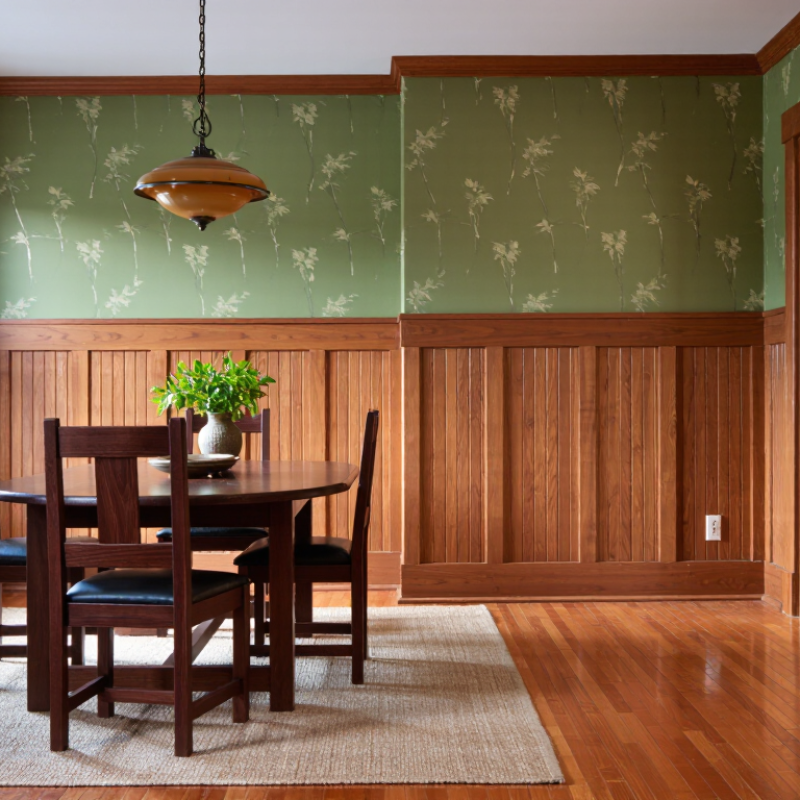
Arts And Crafts Wall Panelling can give a room warmth, rhythm, and a clear sense of craftsmanship. It can also become visually heavy when every surface carries a pattern. The best ideas balance timber, colour, proportion, and natural light. A narrow hallway may suit painted tongue-and-groove boards. A dining room may benefit from oak panels, a simple dado rail, and muted botanical wallpaper above. Small details matter. Visible grain matters.
William Morris, a leading Arts and Crafts designer, offered a useful principle: “Have nothing in your houses that you do not know to be useful, or believe to be beautiful.” His words remain relevant when choosing wall treatments today. Professionals often assess the room’s age, ventilation, humidity, and daily use before selecting materials. Solid wood can age beautifully, but it needs careful installation and maintenance. Moisture-resistant boards may perform better in busy or humid spaces. Samples should be viewed in morning and evening light.
There is no single perfect formula. That is worth admitting. Some schemes look elegant in photographs but feel crowded in real homes. Others appear plain at first, then gain character through shadows, softened edges, and handmade imperfections. This guide explores practical Arts And Crafts Wall Panelling ideas, from stained oak and painted rails to layered colour and restrained geometric patterns. It also considers proportion, installation concerns, and long-term care. A thoughtful design should feel lived in, not staged. The strongest result may be slightly imperfect, but it should remain useful, durable, and visually convincing.
What Defines Arts and Crafts Wall Panelling?
Arts and Crafts wall panelling is defined by honest materials, visible craftsmanship, and calm geometric order. It usually uses quarter-sawn oak, stained timber, or painted wood with simple vertical rails. The design should feel built, not printed. Mission-style proportions often guide the layout, with panels reaching dado height or rising toward the ceiling. Natural grain matters. So do hand-finished edges and restrained decoration.
Grand View Research valued the global wall-panel market at about USD 13.9 billion in 2023, showing strong interest in structured interior surfaces. However, market growth does not define authentic Arts and Crafts work. Proportion does.
In practice, I measure each wall, mark stud positions, and test two stain samples beside the floor. My first choice is not always correct. Dark timber can overpower a narrow room.
Tips:
Keep panel widths consistent, but allow small adjustments around doors. Use solid-looking trim, not flimsy strips. The Wood Handbook reports wood conductivity near 0.1–0.2 W/mK, far below many masonry materials. That can support a warmer wall surface, although panelling is not a replacement for insulation. Choose low-emission finishes and allow timber to acclimatise indoors before installation. Leave movement gaps. Wood changes with humidity. A slightly imperfect joint can remain honest, but uneven spacing usually looks accidental.
Which Materials and Patterns Suit the Style?
Arts and Crafts wall panelling works best when materials feel honest, tactile, and carefully proportioned. Quarter-sawn oak offers visible ray flecks and stronger grain character. Pine costs less, but it needs a stable, well-sealed surface. Painted moisture-resistant MDF can create clean lines in hallways or dining rooms. It is practical, though less authentic when the texture becomes too smooth.
Pattern matters as much as material. Use low dado rails, narrow vertical stiles, and square panels with equal proportions. A simple 1:2 panel ratio usually feels calmer than crowded rectangles. Botanical wallpaper above the panelling can add the movement associated with Arts and Crafts interiors. Keep the motif moderately scaled. Tiny repeated flowers may look fussy under artificial lighting.
Budget decisions deserve attention. The 2024 Houzz & Home Study reported a median US spend of $24,000 on major interior renovations in 2023. That figure includes many project types, not panelling alone, but it shows why accurate measuring matters. Grand View Research forecasts wall-panel market growth of about 5.6% annually between 2024 and 2030, reflecting wider interest in decorative surfaces. I would still inspect the wall for dampness first. Moisture can distort timber and swell fibreboard. My own preference is natural wood on one focal wall, with painted panels elsewhere. It is not perfectly traditional, but it avoids turning the room into a museum set.
Arts and Crafts Wall Panelling Ideas
Traditional Arts and Crafts interiors favour natural materials, visible craftsmanship and orderly geometric patterns. This chart compares representative module widths for timber boards, picture-frame mouldings, cork grids, ceramic tiles and textured lime plaster.
Reference dimensions are typical examples rather than fixed product specifications. Timber boards and mouldings suit vertical or framed layouts, cork and ceramic tiles support repeated grids, while lime plaster creates a continuous textured surface without a regular module.
How to Choose Panels for Each Room
Choosing wall panels starts with the room’s job, not a fashionable photograph. In living rooms, arts and crafts panels can create warmth through oak tones, shallow rails, and hand-painted details. Measure daylight carefully. The 2024 Houzz & Home Study reported that 54% of renovating homeowners completed interior projects, showing continued demand for practical visual upgrades. Yet decorative texture should not overpower furniture, artwork, or movement through the room.
Kitchens and bathrooms need more disciplined choices. Use sealed timber, moisture-resistant fiberboard, or washable painted panels near sinks and cooking areas. The U.S. Environmental Protection Agency advises selecting low-emitting materials to support healthier indoor air quality. Check the panel’s technical sheet. “Water-resistant” is not always waterproof. In a hallway, narrow vertical battens can make a low ceiling feel taller, while robust painted panels protect corners from bags and shoes. Small details matter.
Bedrooms benefit from softer profiles and muted colors. A full-height headboard wall can reduce visual clutter, but deep grooves may collect dust. I once preferred dramatic dark panels, then noticed they absorbed too much evening light. That was a useful mistake. The Illuminating Engineering Society recommends planning layered lighting for different visual tasks, so add wall washers or adjustable lamps before installation. In children’s rooms, avoid fragile projections and inspect fixing points regularly. Safety beats novelty. Choose samples under morning, afternoon, and artificial light. Panels can look completely different by night.
What Colors and Finishes Create an Authentic Look?
Arts and crafts wall panelling feels authentic when color looks settled, not freshly manufactured. Warm olive, muted clay, oatmeal, and smoky blue suit oak, ash, and painted beadboard. The 2024 Houzz and Home Study shows continued homeowner investment in renovation projects, making durable surface choices increasingly important. In practice, a low-sheen finish hides small dents better than a glossy coating. It also keeps the wall’s texture visible.
Use satin sparingly. A soft eggshell finish works well on broad panels, while a slightly deeper tone inside the grooves creates gentle shadow. The National Association of Realtors’ 2022 Remodeling Impact Report gave interior painting a perfect Joy Score of 10, but color alone cannot create character. The timber profile, light direction, and joinery matter more. I once preferred uniform cream panels, yet they looked strangely flat beside old flooring.
Natural oil, limewash, or mineral-style finishes can add depth through uneven absorption. However, “imperfect” should not mean careless. Check the manufacturer’s VOC information and allow proper ventilation, because the U.S. Environmental Protection Agency notes that indoor pollutant levels can be two to five times higher than outdoors. A small test board is essential. View it in morning shade, afternoon sun, and warm evening light. Slight mismatch may be the honest detail the room needs.
How to Plan and Install Arts and Crafts Wall Panels
Arts and Crafts wall panelling works best when planning respects the room’s age, light, and daily use. Measure each wall separately, because older homes rarely have perfectly square corners. Grand View Research valued the global interior wall panel market at approximately $12.8 billion in 2023, showing strong demand for decorative and functional surfaces. Choose moisture-resistant materials for kitchens and bathrooms. MDF suits dry rooms, while solid timber offers richer grain but needs careful acclimatisation.
Draw the panel layout at full scale before buying materials. Keep rail heights aligned with doors, windows, and existing furniture. A practical layout often uses lower panels between 900 and 1,200 millimetres high, with narrow stiles and a consistent gap.
Check electrical outlets early. They can ruin a beautiful rhythm. Leave expansion clearance around timber panels, and record every measurement twice; I still find small errors after rushed marking.
Installation should begin with a dry fit and a level reference line. Locate studs with a detector, then fix battens or panels using suitable screws and adhesive. The U.S. Environmental Protection Agency recommends following indoor air-quality guidance when using coatings and construction adhesives, especially in poorly ventilated rooms. Sand cut edges lightly, seal exposed MDF, and paint sample boards before finishing the wall. A 2024 Houzz renovation report also indicates that homeowners continue investing in personalised interior upgrades, but style should not replace access to switches, ventilation, or future repairs. Beautiful work needs maintenance space.
FAQS
It uses honest materials, visible craftsmanship, and calm geometric order. Natural grain matters. Hand-finished edges help. Panels should feel built, not printed.
Quarter-sawn oak, stained timber, painted wood, and beadboard are suitable choices. Solid timber offers richer grain. MDF can work in dry rooms.
Lower panels often measure 900 to 1,200 millimetres high. Align the top rail with doors, windows, or furniture. Exact height depends on the room.
Warm olive, muted clay, oatmeal, and smoky blue suit this style. Use low-sheen finishes to show texture. Glossy paint may look too manufactured.
Paint a sample board, then view it in morning shade, afternoon sun, and evening light. Place it beside the floor. My first colour choice is not always right.
Measure every wall separately, especially in older homes. Record each measurement twice. Mark doors, windows, studs, outlets, and corners on the layout.
Start with a dry fit and a level reference line. Locate studs before fixing panels. Leave movement gaps around timber. Wood changes with humidity.
Check electrical outlets before finalising the panel rhythm. Keep switches accessible. Leave space for ventilation and maintenance. Beauty should not block practical repairs.
Wood usually feels warmer than masonry because it conducts heat less readily. Panelling is not a replacement for insulation. The difference may feel subtle.
Choose low-emission finishes and ventilate the room properly. Seal exposed MDF edges. Allow timber to acclimatise indoors before installation. Small imperfections are acceptable; careless spacing is not.
Conclusion
Arts And Crafts Wall Panelling is defined by craftsmanship, natural materials, and decorative details inspired by traditional design. It often combines balanced proportions, framed panels, botanical motifs, geometric patterns, and tactile surfaces to create warmth and character. Suitable materials may include timber, painted wood, or textured alternatives, with each option offering a different level of durability and visual depth. Panel choices should reflect the purpose of each room: calming designs for bedrooms, practical and durable surfaces for hallways, and more expressive patterns for dining or living areas.
An authentic look usually comes from earthy colors such as olive, rust, cream, ochre, and deep blue, supported by matte or softly satin finishes. Careful planning is essential before installation, including accurate measurements, layout decisions, wall preparation, and consideration of doors, windows, sockets, and lighting. Panels should be installed securely with neat joints and consistent spacing, while trims and finishing details help create a unified result. With thoughtful choices, this style can make a home feel handcrafted, welcoming, and timeless.